Dr. Na Zhai Clinic Acupuncture & Chinese Medicine
Acupuncture effect on Acute Myocardial ischemia
In 1989, after passing national exams and multiple interviews, I was accepted by Guiyang Medical University—a forty-eight-hour train journey from home. My little girl was only five years old, but my desire to become a qualified doctor was too strong to keep me from boarding that train. I missed her terribly, crying often while studying at the university without her.
To accelerate my journey, I joined a research team at the Beijing Acupuncture Institute, led by Professor Wen Shen—one of the most renowned acupuncture researchers in China. At the time, her team was conducting a bold experiment: they completely severed the left ventricular artery of the coronary artery in rabbits to create a clearly defined ischemic area on the surface of the heart. When the animal woke from surgery, they first recorded its physiological changes and compared the results with those of an acupuncture-treated group. They then observed the heart to determine whether any viable circulation remained in the ischemic area. Finally, through histochemical analysis, they identified whether acupuncture could effectively protect the heart tissue from the permanent blockage of the left ventricular artery.
When I first joined the team, I thought to myself: no matter how powerful acupuncture might be, completely severing a major artery seemed like a dead end—a real-life heart attack in the making. Yet at the same time, I felt a surge of excitement. This controlled experiment would objectively reveal the truth about acupuncture's effects, and I was grateful to witness it firsthand.
I was astonished to see compensatory blood flow enter the ischemic window—not from the original blood flow, but reversely, from a capillary network consisting of the ends of all major arteries. This network actively engages in supplying blood to the heart whenever it is needed. It is, literally, a second blood supply to the heart.
You might ask the same question I did: if this secondary blood supply truly exists and can activate immediately when a major artery is blocked, why do we still see rising rates of heart attacks and deaths in modern life?
The scientific team concluded that the network does indeed exist and engages reversely to supply the ischemic area—but significantly more weakly in the non-acupuncture group compared to the acupuncture group. Why? They found that acupuncture effectively mobilizes the entire bodily system to fight: stimulating healthy arteries to carry blood away from the heart under high pressure, while stimulating skeletal muscles to flex and squeeze, helping push blood back up through the veins against gravity, and so forth. Subsequent histochemical analysis confirmed that acupuncture significantly prevents heart tissue from dying. In short, the effectiveness of this existing network depends largely on your overall bodily function.
As we can now see, the network's potential power relies heavily on whole-body health. When a person lives with poor lifestyle habits, an unhealthy diet, or prolonged stress for years, they gradually damage not only their arteries but also their body's capacity for self-healing. This weakened system not only increases the risk of a heart attack but also limits the body's ability to recover from one.
In 1993, Professor Wen Shen published her findings in Chinese Acupuncture. She concluded: "Electroacupuncture at the Nei-guan acupoint exerts a protective effect on experimental animals subjected to ligation of the left coronary artery's ventricular branch for thirty minutes, positively influencing various physiological parameters—such as the electrocardiogram and myocardial contractility—as well as myocardial microcirculation, myocardial glycogen, phosphorylase, and succinate dehydrogenase." Some research photos from Prof. Wen Shen are attached below.
At the time, I was a Master's student at Guiyang Medical University. My own research focused on electron microscopic observation of cellular ultrastructure following acute ischemia and acupuncture intervention. Working alongside Professor Wen's team, I collected the same animal tissue samples—from the same locations and at the same time points—and examined them under an electron microscope. Ultrastructural changes in cells are among the most sensitive and reliable indicators of early ischemic injury. The animal model and optical microscopy studies established by Professor Wen's team provided the essential foundation for the electron microscopy research I was about to undertake.
Experimental results under optical microscope (Prof Wen and her team)
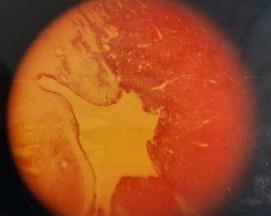
Myocardial glycogen is depleted in the ischemic zone. Cross-sectional view of myocardium under a surgical microscope.
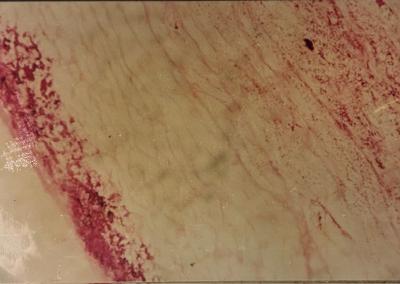
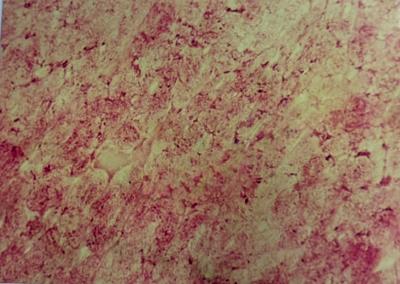
Microscopy images showing the depletion of myocardial glycogen in the ischemic zone (right) and the effects of electroacupuncture. The experiment demonstrates that electroacupuncture can effectively prevent the loss of myocardial energy reserves caused by acute ischemia.
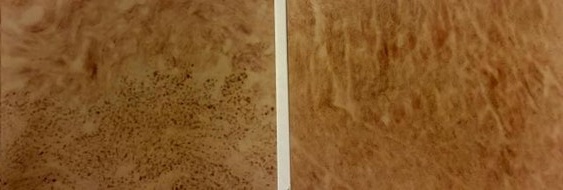
Microscopic images show the depletion of myocardial 6-phosphate dehydrogenase in the ischemic region (right side) and the effect of electroacupuncture. The experiment demonstrates that electroacupuncture can effectively prevent the loss of a portion of this enzyme.
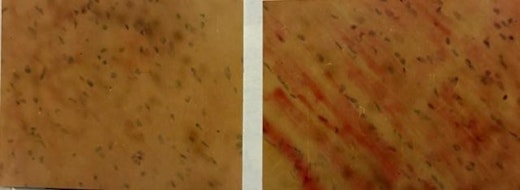
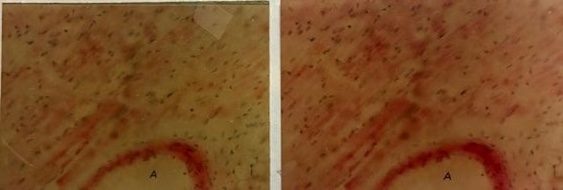
Microscopy images showing the depletion of RNA in the ischemic myocardial zone (right) and the effects of electroacupuncture. The experiment demonstrates that electroacupuncture can effectively prevent the loss of RNA caused by acute ischemia.
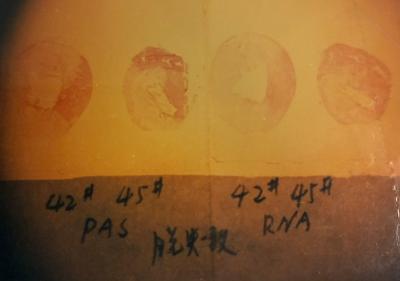
Experiments observed synchronous ischemic depletion of myocardial glycogen (right) and myocardial RNA, as well as the protective effect of electroacupuncture.
Observation under electron microscope
1. Cardiac muscle fibers and the mitochondria clustered within them.
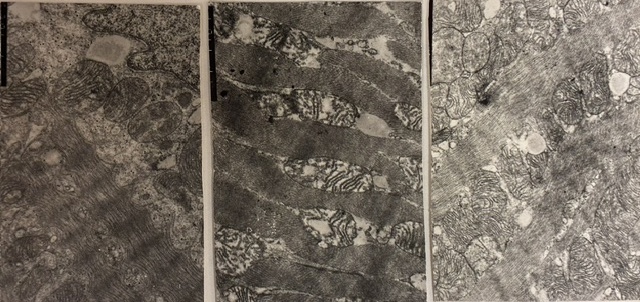
*Normal group *Non-acupuncture group *Acupuncture group
2. Cardiomyocyte nucleus
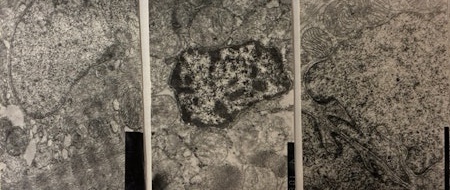
Normal group Non-acupuncture group Acupuncture group
3. Myocardial microvessels
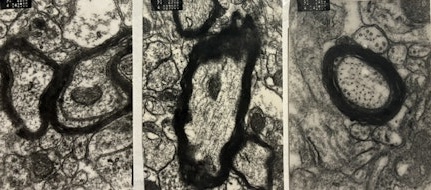
Normal group Non-acupuncture group Acupuncture group
Acupuncture by Dr. Na Zhai Springfield IL
1200 S 5th Street, Springfield IL 62703