Dr. Na Zhai Clinic Acupuncture & Chinese Medicine
Never Come to a Conclusion in Ignorance
In 1989, I had just finished my Master's studies at Guiyang Medical University in southern China. One morning, an article on the front page of a national daily newspaper caught my attention. It was a clinical report claiming that 66% of 5,168 stroke patients were able to return to work after acupuncture treatment.
I thought it was a joke. The brain lacks energy reserves, unlike the heart muscle, which possesses glycogen stores for emergencies. Without blood, brain cells die within minutes, and soon the ischemic area and surrounding tissues would become watery and disappear. How could acupuncture possibly bring back 66% of these patients?
I love science. I love performing scientific research. And I hate lies.
I picked up the phone and called Tianjin University of Traditional Chinese Medicine, asking to speak with Professor Shi—the team leader and a top national expert in clinical acupuncture research.
There was a long period of silence after my questions, which fired out like a machine gun. Perhaps he felt I was interrogating him. I felt terribly sorry for my bold behavior. Although I was sure he wouldn't be able to answer my questions, being presumptuous did not make me look good either.
Thank God, he started talking. "Dr. Zhai, we have one Ph.D. opening. Would you like to perform your 'scientific research' on this project?"
I remembered seeing his advertisement in a national newspaper about the single Ph.D. opening. I said, "Sure," just trying to make up for my improper manner at the beginning.
"Okay. If you can win the national competition, I will support you with all my means. Good luck!" He hung up the phone.
I stood there, not knowing whether to laugh or cry. I didn't want to spend my time on nonsense, but I had just said yes.
Due to the Cultural Revolution, Chinese people had been starved of academic opportunities for over a decade. The National Exam was the only road to higher education, and the enrollment rate was just 1%, with multiple interviews required for graduates. I made up my mind to prove the truth. I put my mind to the task immediately—and I won the spot. My goal was to prove that acupuncture had merely a psychological effect on stroke—period!
The Discovery
The first step was to find a lab that had the equipment I needed to perform the research. In China, TCM universities are more focused on clinical research and ancient classical texts; they lacked basic scientific research facilities. I found Professor Xu-Ping’s histochemistry lab at Tianjin Second Medical University and was accepted. Professor Xu became my co-doctoral advisor.
For eight months, I stayed in the lab. I ate and slept there. The animal model strictly adhered to the world standard for stroke research. We rigorously designed every step of the experiment, striving for flawlessness. What we found shocked me, and I couldn't help but develop a deep respect for ancient TCM.
It turned out that God designed our brain with a double blood supply. If one major artery becomes blocked, compensatory blood can enter the ischemic area from the ends of other major cerebral arteries. Because a stroke affects the entire body system, the power of self-healing is often limited. But acupuncture can effectively promote the whole body system—dispatching and mustering its resources to overcome the emergency.
My research was the first to show morphological evidence clearly demonstrating the effect of acupuncture on stroke. The result was broadcast on national CCTV news.
There are still myriad mysteries regarding how acupuncture works. But it is hard to ignore its amazing healing effect. Acupuncture remains a powerful clinical tool in the modern world today.
The moral of the story is simple: Never come to a conclusion in ignorance.

 On the streets of Japan
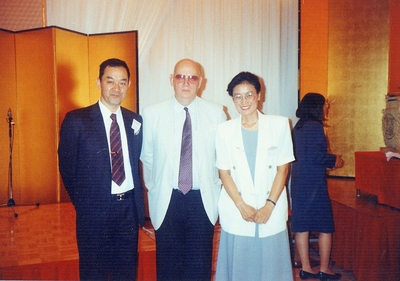
 After the International Medical Congress in Japan
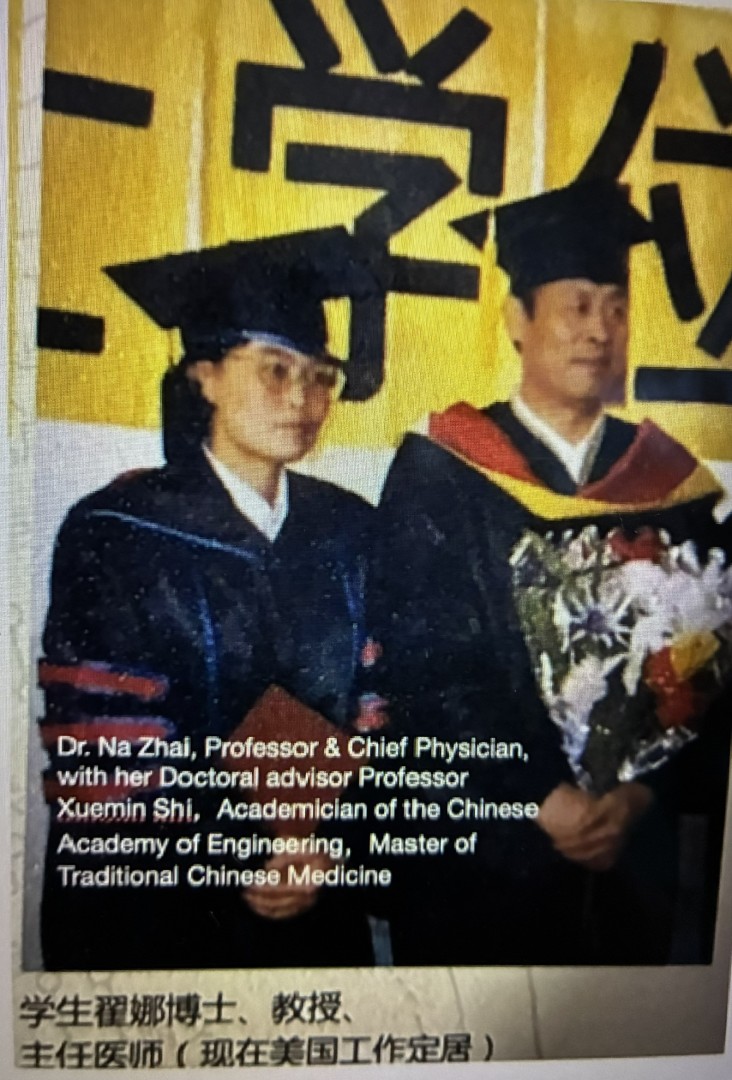 At the doctoral degree celebration with my supervisor Professor Shi Xuemin
 With Professor Xu Ping
 The State Journal-Register featured Dr. Na Zhai and Dr. Claude Fortin's collaboration.
 Our patient John Landers The newspaper headline read: "Acupuncture goes mainstream."
 China Health reports on the research findings of Dr. Zhai Na.
 Tianjin Daily reported on the research work of Dr. Zhai Na
 With Dr. Fortin and friends in a international meeting
 With Professor Baozhen Zhang and colleagues in Lab
 Having a meal with Japanese professors and colleagues
 With SIU medical students in my clinic
 A Visit to Dr. David Hu, a renowned AIDS Expert
 Discussing Traditional Chinese Medicine with Japanese People
 Giving lecture on Traditional Chinese Medicine in Japan
 After an international meeting in Japan